



What to Do in a Dental Emergency (Step by Step)
A knocked-out tooth, swelling, or a cracked filling at 9pm. Here's exactly what to do in the moment, calmly and step by step, and when to call us right away.
November 14, 2025 · 6 min read
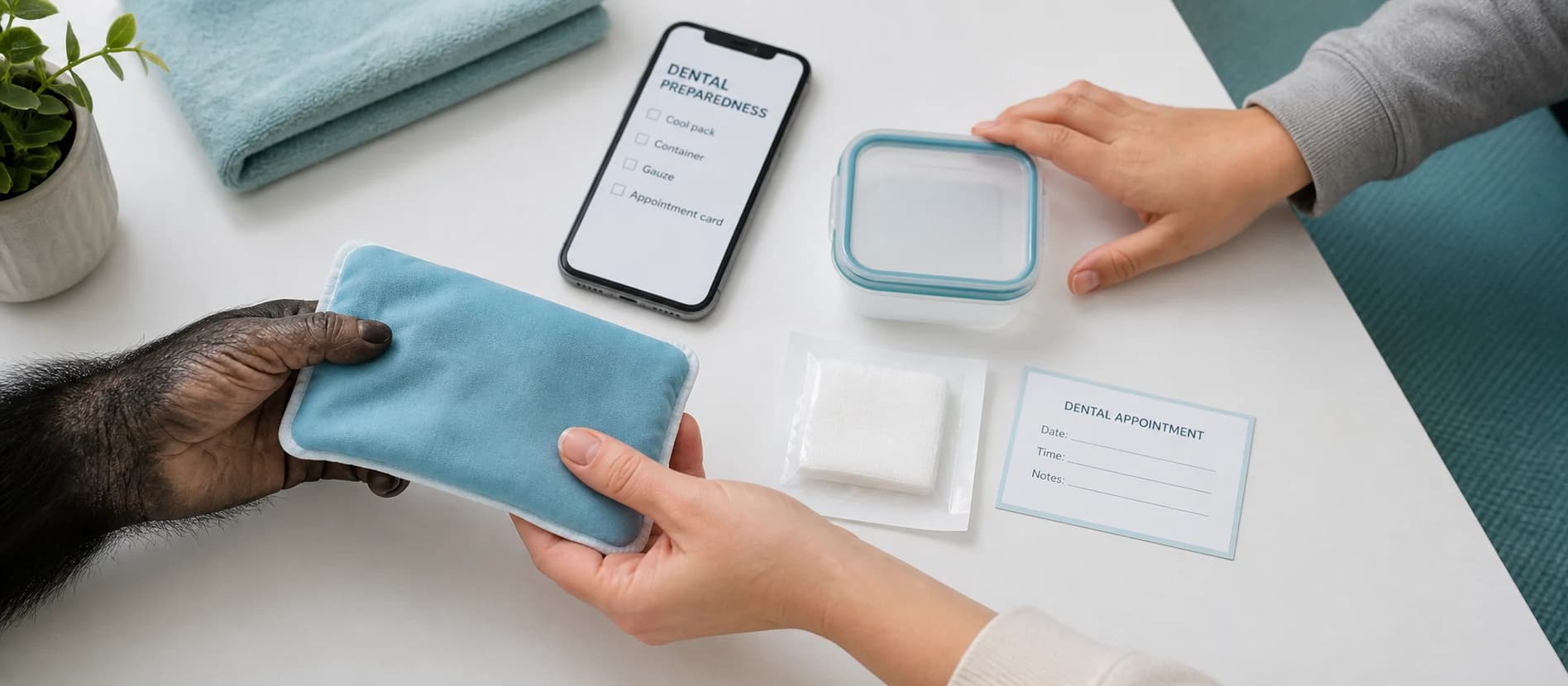
First, don't panic
Dental emergencies have a way of turning up at the worst moments. A tooth knocked out at a kid's soccer game, or a throbbing toothache on a Sunday night. Here's the reassuring part: calm, steady action in the first hour often makes the difference in saving a tooth.
Keep this guide somewhere you can find it. And know that we welcome dental emergencies here in South Surrey. Once you've done the first steps below, call us at (604) 541-9790 and we'll help you figure out the next move together.
A knocked-out tooth
This one really is a race against the clock. A knocked-out adult tooth has its strongest chance if it's back in place within about 30 to 60 minutes. Here's what to do.
- Pick the tooth up by the crown, which is the white part you normally see. Try not to touch the root.
- If it's dirty, rinse it gently with milk or saline. Don't scrub it.
- Try to slip it back into the socket and bite softly on a clean cloth to hold it there.
- If it won't go back in, keep it moist in milk or tucked in your cheek. Plain water isn't ideal.
- Call us right away. Time matters more than anything else here.
Toothache and swelling
A toothache that hangs around, especially with swelling, can be a sign of an infection that needs a look rather than just patience. It's worth having it checked instead of waiting it out.
Rinse with warm salt water, floss gently to clear anything that's stuck, and take an over-the-counter pain reliever as directed on the label. Don't place aspirin straight on the gum, since it can burn the tissue. If you notice swelling in your face, a fever, or swelling spreading toward your eye or neck, treat it as urgent and seek care right away, because an infection can become serious.
Broken, chipped, or lost filling
A cracked tooth or a filling that's come out is uncomfortable, but it's usually not a same-minute emergency. Save any pieces you can find and bring them in with you. Think of a crack like a chip in a windshield: it's wise to have it looked at before it spreads, but you have a little time.
Rinse your mouth with warm water. If there's a sharp edge, a small piece of sugar-free gum or some dental wax can cover it for now and protect your tongue and cheek. Stick to soft foods and chew on the other side until we can see you.
When to go straight to the ER
Most dental emergencies are handled well at a dental office. A few situations, though, call for the hospital first.
- Swelling that makes it hard to breathe or swallow.
- Bleeding that won't stop after steady pressure.
- A jaw injury or a possible broken jaw from a blow or fall.
- A high fever along with a lot of facial swelling.
Prevention beats the emergency
Many emergencies trace back to something small that went unwatched: a tiny crack, a filling on its last legs, or quiet gum trouble. That's the heart of our prevention-first approach. We catch the little things at regular checkups so they don't grow into a 9pm scramble.
If you've just been through an emergency, that's also a good moment to ask what caused it and how to steer clear of a repeat. We'd always rather help you stay out of the chair than hurry you into it.